

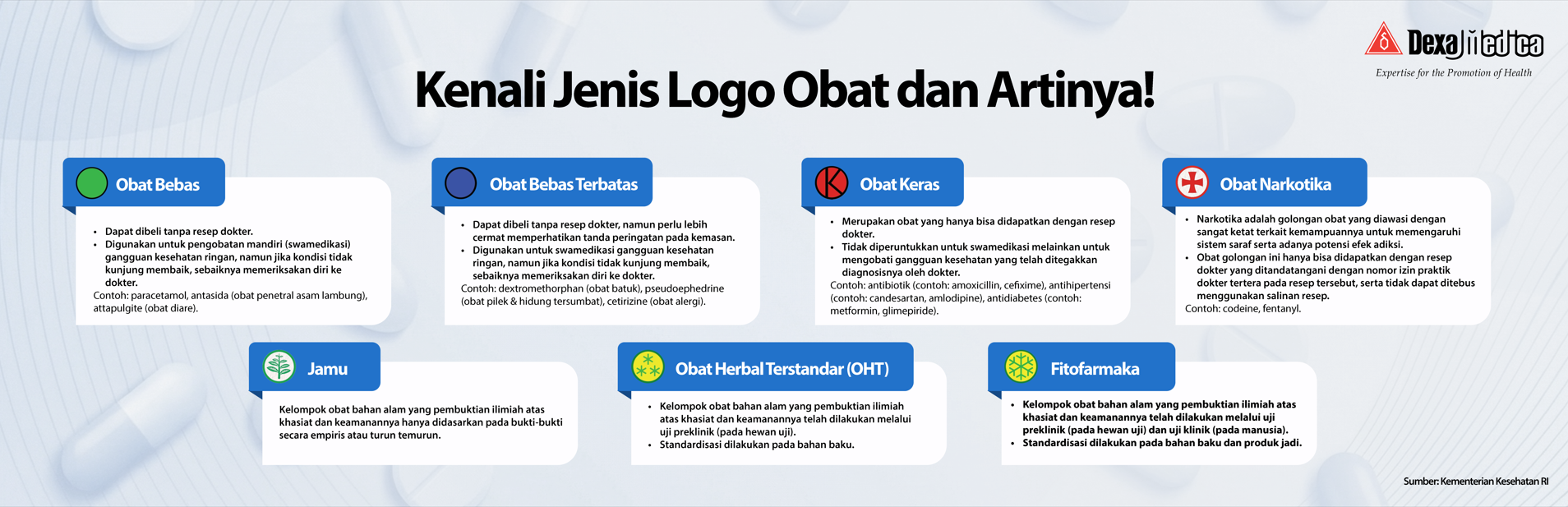
Amid ongoing public discussions regarding the use of prescription medicines, it is important for the public to understand the meaning of the symbol displayed on medicine packaging. The red circle symbol with the letter “K” does not indicate that the medicine is dangerous; rather, it signifies that the product is classified as a prescription-only medicine whose use must be conducted under the supervision of a healthcare professional through a doctor’s prescription. This symbol functions as a regulatory safeguard to ensure that medicines are used according to appropriate medical indications and with proper risk considerations.
According to Dr. Ratna Kumalasari, Medical Information Senior Manager at PT Dexa Medica, medicines bearing the red circle symbol generally have stronger pharmacological effects or act on specific organ systems, thereby requiring medical evaluation prior to use. “A doctor’s prescription forms part of a comprehensive clinical assessment process. Physicians consider the diagnosis, medical history, blood pressure, cardiac, hepatic, and renal function, hormonal status, potential drug interactions, as well as age and pregnancy. Without adequate medical assessment, self-medication with prescription medicines may increase the risk of adverse effects, whether due to inappropriate dosing or the presence of medical conditions that constitute contraindications to the medicine,” explained Dr. Ratna.
Dr. Ratna further stated that in medical practice, a condition in which a medicine should not be used or is not recommended for use is referred to as a contraindication. Contraindications may be absolute, meaning the medicine must not be administered under certain conditions. Alternatively, they may be relative, where the medicine may still be used but requires strict monitoring and specific clinical consideration. “An understanding of contraindications is one of the primary reasons why prescription medicines require clinical judgment by a physician and may only be obtained through a prescription,” she said.
As an illustration, Dr. Ratna noted that one active ingredient frequently found in medicines bearing the red circle symbol is pseudoephedrine. Pseudoephedrine is classified as a decongestant used to relieve nasal congestion. It works by inducing vasoconstriction of blood vessels in the respiratory mucosa, thereby reducing congestion and improving airflow. Clinically, pseudoephedrine has long been recognized as effective in relieving nasal congestion and rhinorrhea commonly experienced by patients with influenza. However, this vasoconstrictive effect may also lead to increased blood pressure and heart rate in certain individuals.
“Therefore, pseudoephedrine is contraindicated in patients with uncontrolled hypertension, coronary heart disease, cardiac arrhythmias, hyperthyroidism, and in patients with certain histories of stroke. Its use in pregnant and breastfeeding women, children, and older adults also requires specific medical evaluation and consideration,” Dr. Ratna added.
In addition, in accordance with prevailing regulations in Indonesia, pseudoephedrine is classified as a precursor substance. A precursor is defined as a chemical substance that may be used in the manufacture of narcotics and psychotropic substances. As such, substances categorized as precursors carry the potential for misuse if not adequately controlled. Consequently, their distribution and use are strictly regulated through prescription systems and applicable oversight mechanisms. This regulatory framework does not imply that the substance is unsafe; rather, it is intended to ensure that its therapeutic benefits remain appropriately accessible while minimizing the risk of diversion.
Ultimately, understanding the meaning of the red circle symbol on medicine packaging means recognizing that every medicine has both therapeutic benefits and clinical limitations. Prescription medicines are not to be feared, but to be used appropriately in accordance with medical indications and each individual’s health condition. Through consultation with healthcare professionals and adherence to prescribed directions, therapeutic outcomes can be optimized while risks remain appropriately managed. Strengthening health literacy is therefore essential to ensuring that patient safety remains a priority in every instance of medicine use.