

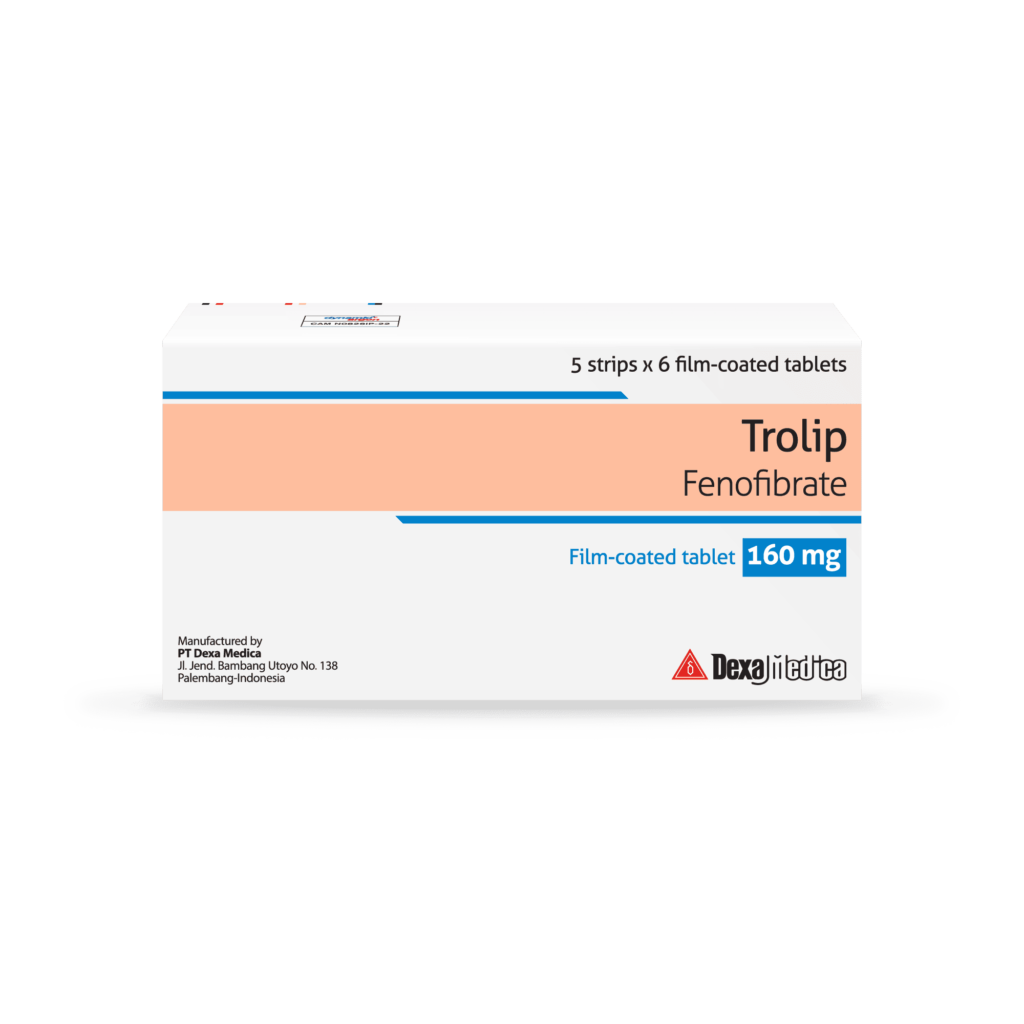
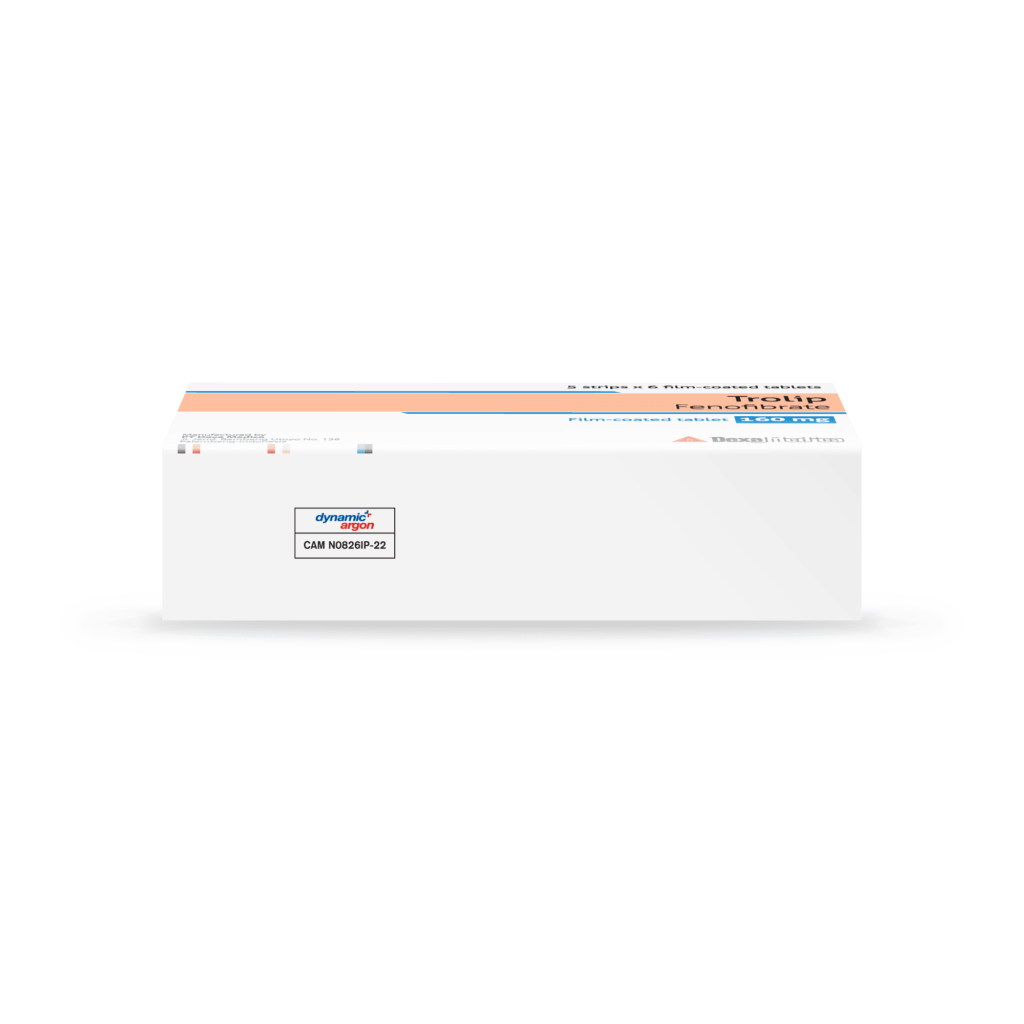
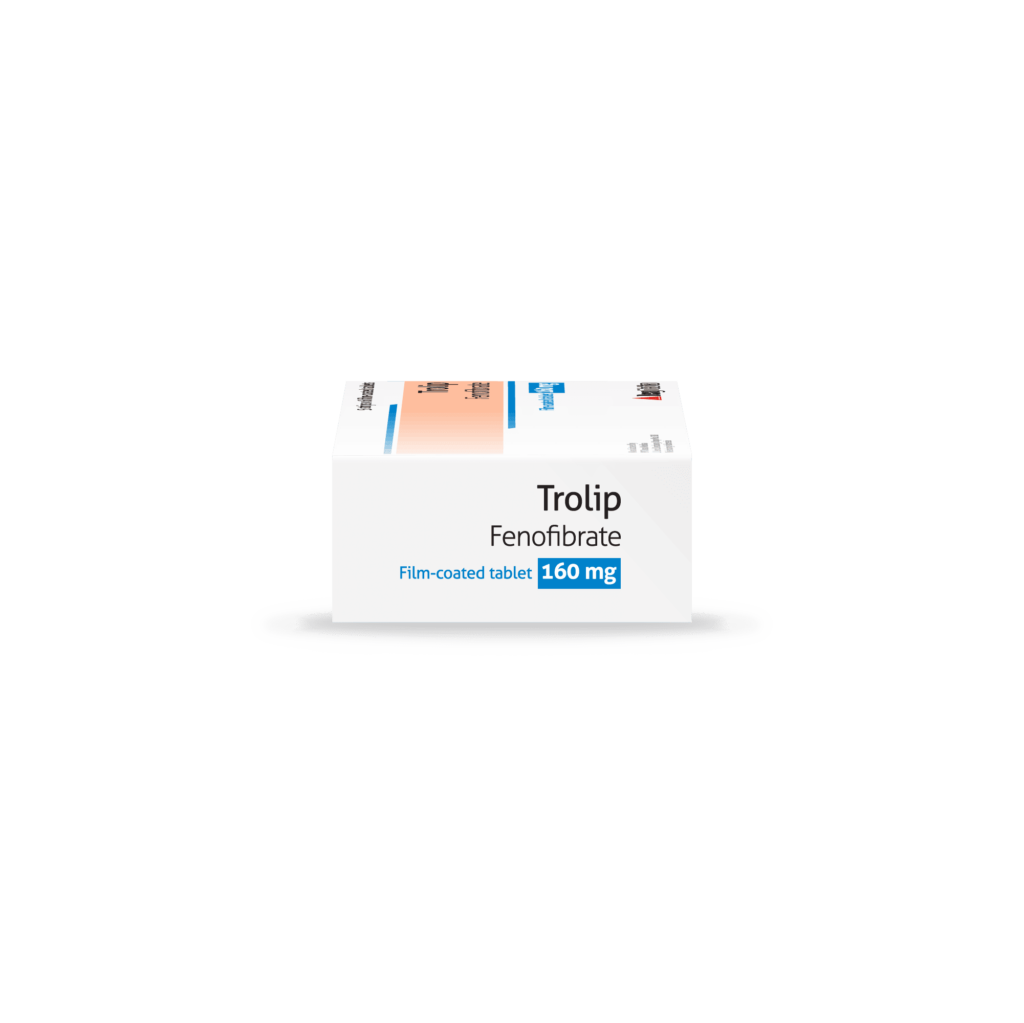
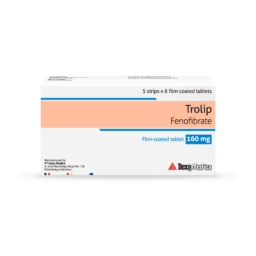
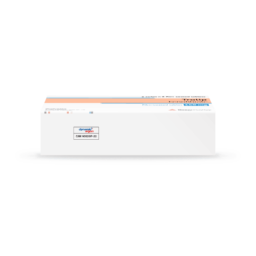
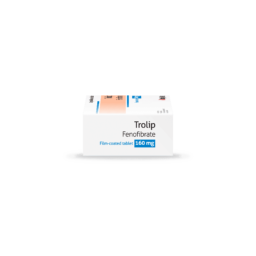
Trolip 160 mg
 Cambodia • Dexa Medica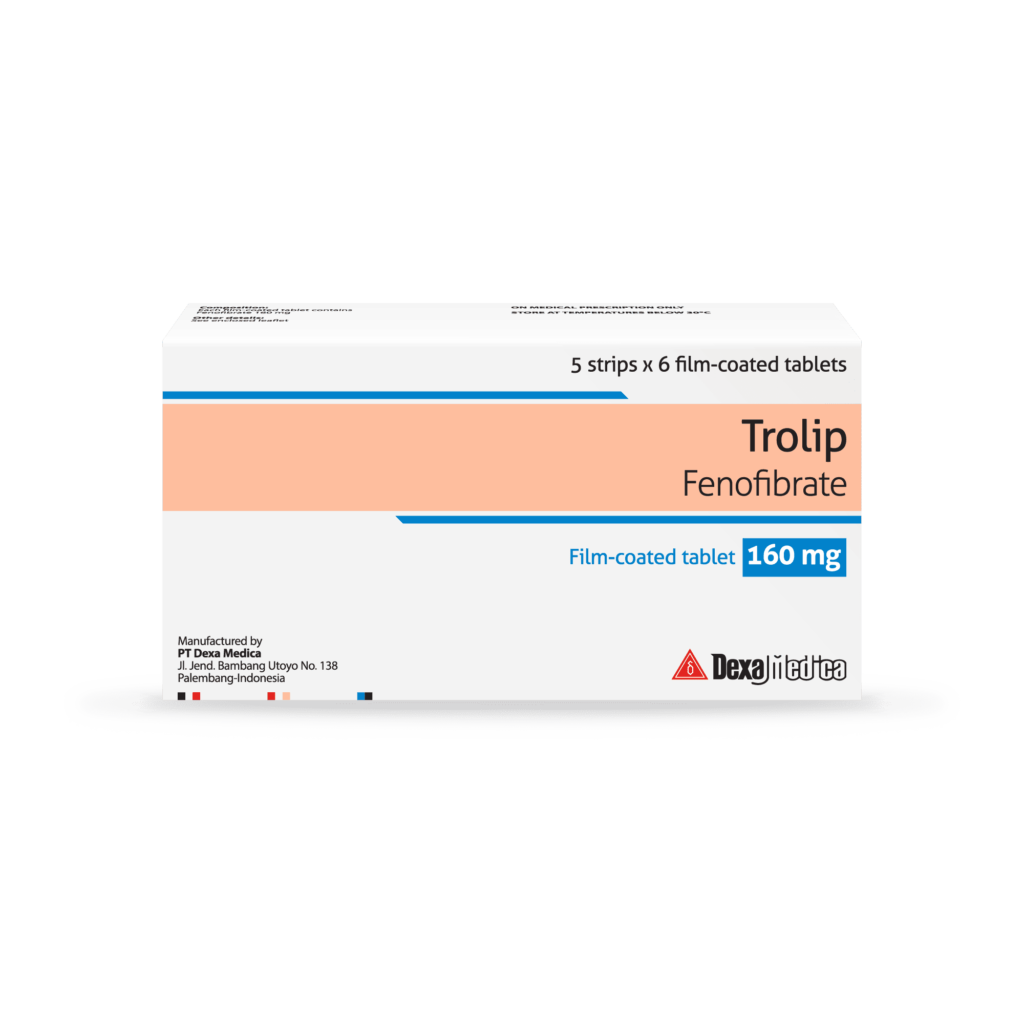
Indication
Hypercholesterolemia (type IIa) and endogenous hypertriglyceridemia either isolated (type IV) or associated (type IIb and III) when an assiduously followed adapted diet turned out to be insufficient, when blood cholesterol after the diet is still high and/or when there are associated risk factors. It is always essential to continue the diet.
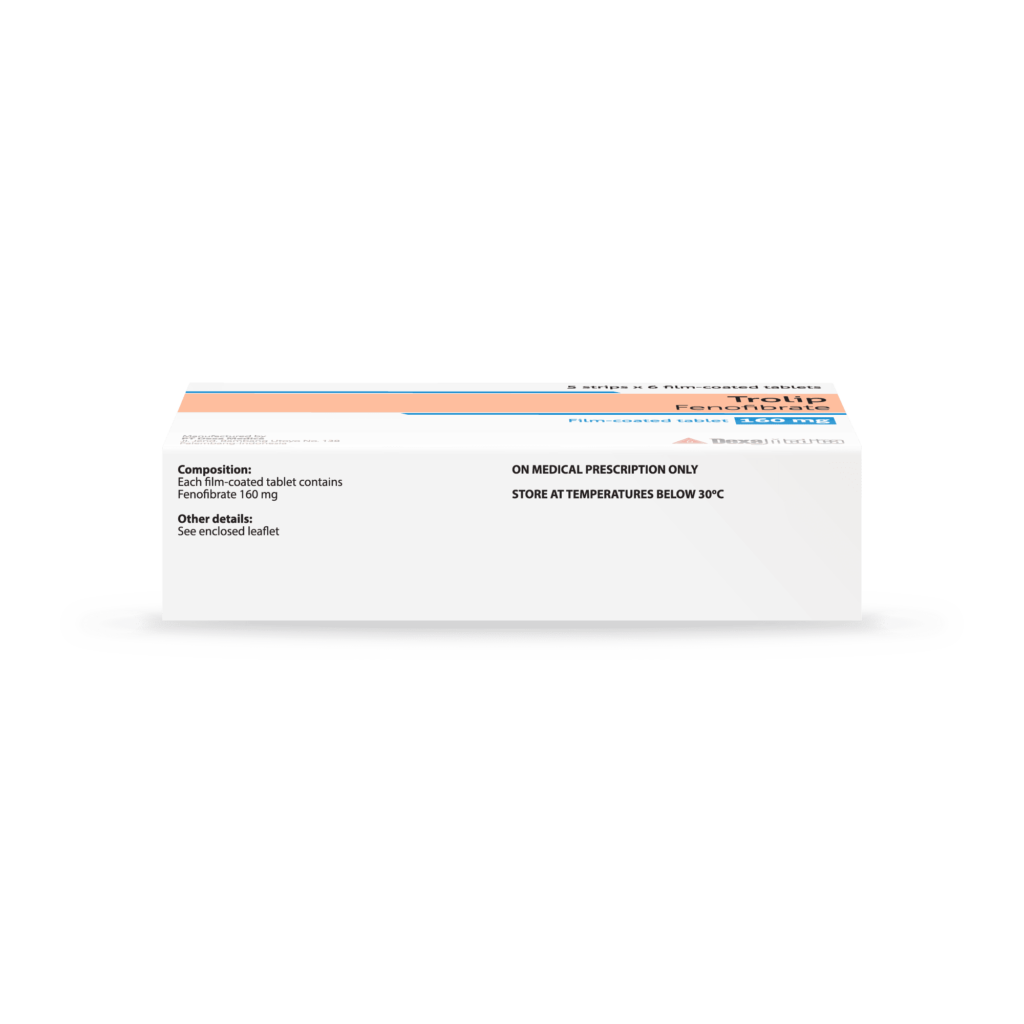
Composition
Fenofibrate 160 mg
Package
Dosage Forms
 Tablet
ATC Classification
Warning




Dosage
Dietary measures initiated before therapy should be continued. Response to therapy should be monitored by determination of serum lipid values. If an adequate response has not been achieved after several months, complementary or different therapeutic measures should be considered.
Adults
The recommended dose is one tablet containing 160 mg fenofibrate taken once daily.
Elderly patients (>65 years old)
No dose adjustment is necessary. The usual dose is recommended, except for decreased renal function with estimated glomerular filtration rate <60 ml/minute/1.73 m2.
Patient with renal impairment
Fenofibrate should not be used if severe renal impairment, defined as eGFR <30 ml/minute/1.73 m2, is present. If eGFR is between 30 and 59 ml/minute/1.73 m2, the dose of fenofibrate should not exceed 100 mg standard or 67 mg micronized once daily. If, during follow-up, the eGFR decreases persistently to <30 ml/minute/1.73 m2, fenofibrate should be discontinued.
Hepatic impairment
Fenofibrate 160 mg is not recommended for use in patients with hepatic impairment due to the lack of data.
Pediatric population
The safety and efficacy of fenofibrate in children and adolescents younger than 18 years has not been established. No data are available. Therefore the use of fenofibrate is not recommended in pediatric patients under 18 years.